Go back
The Daily Brief
Trump's Tuesday Deadline Redraws the Binary — And Unhedged Exposure Sits Squarely in the Crosshairs
Tuesday, 07 April 2026
Trump's Hormuz deadline hits tonight. Brent above $110, rate paths diverging across the G7, and infrastructure damage already locking in months of elevated costs. The hedging window is narrowing faster than the diplomacy.

British Pound
Sterling slipped toward $1.32 in Friday's session before the Easter break, nearing its lowest level since late November and capping a bruising week in which Trump's prime-time address offered no clear end to the conflict. The pound closed around $1.3235, leaving it down roughly 1.9% against the dollar for March alone — its worst monthly performance since July 2025. Against the euro, sterling was broadly unchanged near 86.5 pence, a sign that much of the pressure remains a dollar story rather than a uniquely British vulnerability.
The deeper concern is that the UK economy is already feeling the strain. March flash PMI data released last week showed business activity growing at its slowest pace in six months, while manufacturers' input costs surged at the sharpest monthly rate since 1992. February CPI held at 3.0%, but that reading now looks like a relic from a different world. The Bank of England's own staff projections point to inflation running around 3.5% through the summer if energy prices remain at current levels, with the Ofgem price cap likely to ratchet higher from July.
Rate expectations have undergone a complete inversion. Before the war, markets were pricing two cuts by the BoE in 2026. Following the March meeting's unanimous 9-0 hold and Governor Bailey's warning that the MPC stands ready to act, traders are now pricing two hikes by year-end, with a roughly 67% probability of an increase at the 30 April meeting. Some houses — notably JP Morgan — see at least two increases this year, potentially beginning in April. Others, including Berenberg, remain more cautious, arguing that sluggish growth and a softening labour market limit the scope for a genuine tightening cycle.
The split reflects a classic stagflationary dilemma: energy-imported inflation colliding with weakening demand. UK government borrowing overshot expectations last month, and the fiscal space to cushion households is thin. Two-year swap rates, which feed directly into mortgage pricing, have climbed sharply, and the average two-year fixed mortgage is now 5.56% — roughly £85 a month more expensive than before the war began.
For sterling-denominated exposures, the week ahead carries outsized event risk. If Trump's deadline passes without escalation, the pound has room to recover toward $1.34 as rate-hike pricing moderates. If strikes on Iranian infrastructure proceed, Brent could push well above $120 and the BoE's hand would be forced — tightening into weakness, with sterling caught between higher rates and deteriorating growth. In either scenario, the cost of leaving cable exposure unhedged has risen materially, and the window to lock in forward cover at current levels may not last.
Read more...

US Dollar
The Dollar Index sits just below 100 this morning, holding near recent highs but off the 100.2 peak touched on Monday as conflicting signals from Washington kept traders from extending long positions. The greenback is up around 2% for the month, cementing its status as the market's preferred safe haven during the conflict — bolstered by the dual tailwind of geopolitical uncertainty and America's position as a net energy exporter. Friday's March payrolls report added another layer of support.
The economy created 178,000 jobs, nearly three times the consensus estimate of 60,000, with the unemployment rate ticking down to 4.3%. The headline was flattered by returning healthcare strikers, but beneath the surface, wage growth cooled to 3.5% year-on-year — the lowest since mid-2021. The Fed will see a labour market that is resilient enough to justify patience but not hot enough to demand action. Following the data, Fed funds futures price a 77.5% probability of no move through December, with only a residual chance of a hike — a stark contrast to Europe, where multiple increases are now expected.
The Fed's posture remains deliberately cautious. Governor Barr said last week that rates may need to stay steady "for some time" before further cuts are warranted, citing inflation above target and the risks from the Middle East. The April 28–29 FOMC meeting is expected to be a non-event, with the committee waiting for April CPI and payrolls data before recalibrating. The 10-year Treasury yield hovered at 4.31% over the weekend, up some 40 basis points since the war began — a repricing that tightens financial conditions globally without the Fed lifting a finger.
Geopolitically, the dollar's trajectory hinges entirely on tonight's deadline. Trump told reporters on Monday that Iran is negotiating "in good faith" but dismissed the mediators' 45-day ceasefire proposal as "not good enough." Iran has rejected any temporary truce, demanding a permanent settlement, and the Revolutionary Guard declared that conditions in the Strait will "never return to the former status." If strikes on civilian infrastructure proceed, the dollar likely surges past 100.5 on renewed safe-haven flows. If a deal materialises, the war premium unwinds swiftly — and that reversal is the single biggest risk to current dollar strength.
The structural picture matters for anyone holding or converting dollar positions. The greenback is trading well above where most institutional forecasters placed it for mid-2026, and the premium is almost entirely conflict-driven. That makes it inherently fragile: a ceasefire could erase weeks of gains in days. For clients with dollar receivables, the current strength offers an opportunity to convert at levels that may not persist. For those with dollar payables, the risk is asymmetric — further escalation lifts the dollar modestly from here, but de-escalation drops it sharply.
Read more...

South African Rand
South African markets reopen this morning after a four-day break — Good Friday and Family Day kept the JSE and local FX desks closed since Thursday — and the rand faces a wall of unpriced risk. The currency last traded around 16.92 against the dollar on Wednesday, having recovered from the four-month low of 17.25 hit at the end of March. But since then, Trump has issued a profanity-laden ultimatum on Iranian infrastructure, Iran has rejected a 45-day ceasefire, Brent has climbed above $110, and the March US payrolls report blew past expectations. None of that is in the price. Today's open will be the market's first opportunity to digest it all at once, and gap risk is elevated.
The SARB's March decision, delivered the day before the break, set the domestic tone: a unanimous hold at 6.75%, with Governor Kganyago warning that the conflict represents a supply shock capable of pushing headline inflation above 4% in the near term. The bank outlined two risk scenarios, both pointing to possible rate hikes. A shorter conflict could trigger one increase; a prolonged war with sustained high oil prices and a weaker rand could require multiple. The easing cycle that had been building since late 2024 — with 150 basis points of cuts already delivered — is now firmly on pause, and the market consensus has shifted to rates remaining on hold for the rest of 2026.
The domestic data is caught in a tug-of-war. February CPI printed at exactly 3.0%, perfectly on the new target midpoint, and the January composite leading indicator rose 0.4% month-on-month — both readings that would normally support further easing. But fuel inflation of more than 18% is expected for Q2, with petrol prices set to rise by over R5.70 per litre and diesel by around R10. That pass-through, combined with the Eskom tariff hike of 8.76% effective 1 April, will compress household spending power precisely when confidence needs to hold.
On the Johannesburg Stock Exchange, the Top-40 will also need to catch up with a volatile global equity session. The benchmark 2035 government bond yield closed at around 8.975% on Wednesday — still well above the sub-9% levels seen before the war. Gold, which typically provides a natural offset for South African risk, has depreciated roughly 12% since the conflict began as rising global yields and a stronger dollar erode its appeal. That leaves the rand without its usual commodity cushion heading into what could be one of the most volatile local sessions of the year.
The opening print today will reveal how much of the weekend's escalation is already being priced offshore. If Trump's deadline passes without a deal and strikes on Iranian infrastructure proceed, Brent could push toward $120 and the rand would face renewed pressure toward the 17.20–17.50 range, reopening the question of an emergency SARB response. A credible de-escalation, by contrast, would likely pull USD/ZAR back toward 16.50 rapidly as the oil premium deflates. For anyone with rand exposure, the four-day gap between the last local trade and this morning's open is a reminder that long weekends in volatile markets carry a cost — and that securing conversion rates before the next headline, rather than after it, is the more prudent path.
Read more...

Global Markets
Brent crude is trading at $110.05 this morning, up around 0.8% in early Asian trade after Israel struck Iran's South Pars gas field on Monday and the Revolutionary Guard's intelligence chief was among dozens killed in a fresh wave of US-Israeli attacks. Oil has climbed roughly 70% from pre-war levels, and the EIA now forecasts prices remaining above $95 through the next two months before easing below $80 in Q3 — a trajectory that assumes a conflict resolution timeline that looks increasingly optimistic given the state of negotiations.
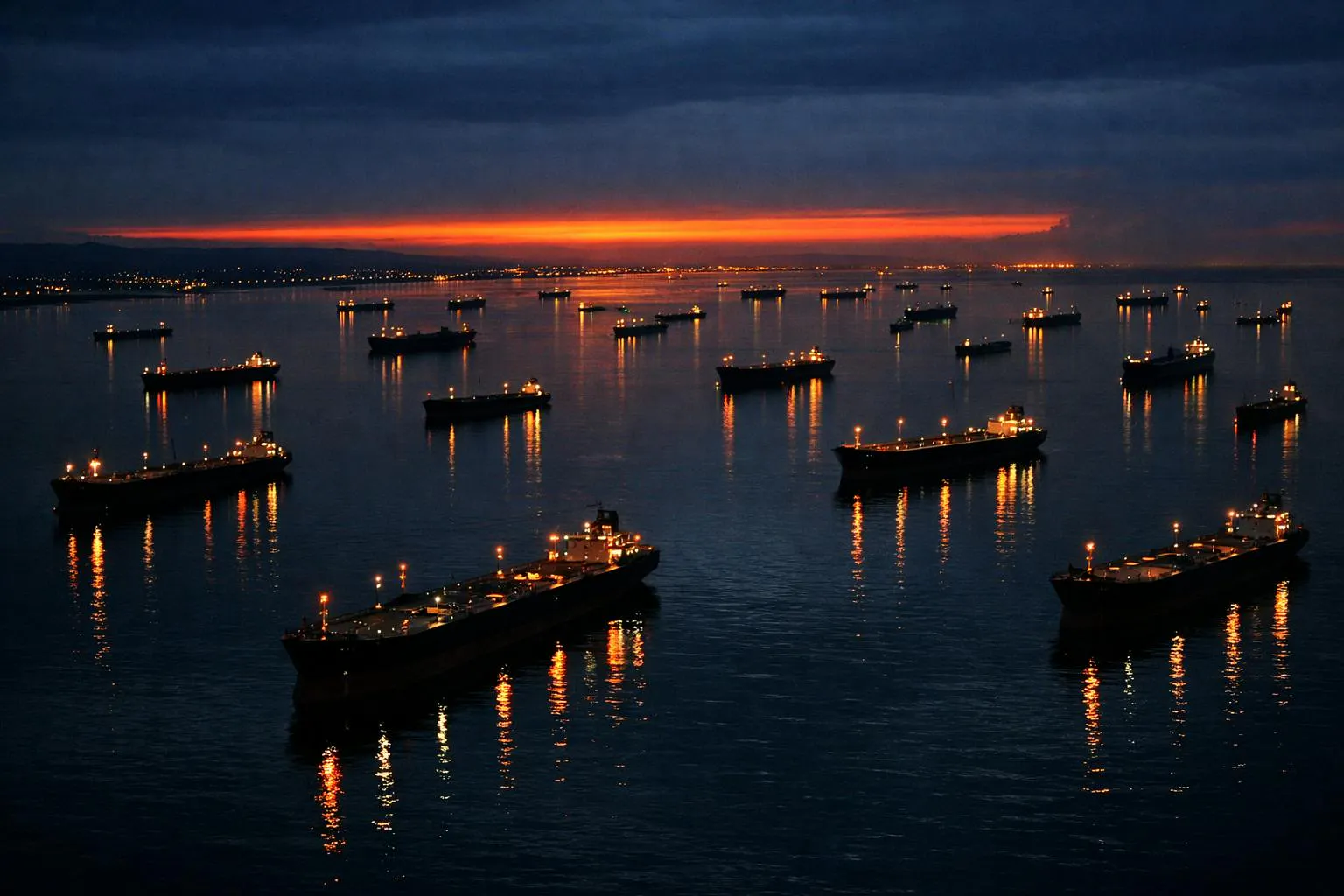
The physical market tells a starker story. Ship transits through the Strait of Hormuz have collapsed from 130 per day in February to just six in March, according to the UN. Even if a ceasefire materialises tonight, damaged infrastructure across the Gulf would take months to restore, and shipping companies estimate at least two months to resume normal tanker operations. The Eurasia Group notes that roughly 70 empty supertankers are currently anchored off Singapore, waiting for a green light that may not come soon. This means energy prices are structurally elevated regardless of the diplomatic outcome — the question is how far above $100 they settle.
The rate landscape across developed markets has diverged sharply. The Fed is on hold, with futures pricing no move through December. The ECB's Lagarde opened the door last week to rate hikes if the energy shock persists, and traders price roughly two increases by year-end. The BoE is expected to hike at least twice, with the April meeting live. The Bank of Japan has left the door open to a move as soon as this month, and the Reserve Bank of Australia has already hiked twice. This divergence — a hawkish world except for the Fed — is the defining feature of the current macro regime, and it compresses the dollar's downside while amplifying the pain for energy-importing economies.
Equities are suspended between relief-rally hopes and escalation risk. The S&P 500 rose 3.4% last week on dip-buying, closing at 6,583, but remains 5% below its pre-war high. MSCI Asia-Pacific ex-Japan is set for an 8.7% monthly decline, the steepest since October 2022. Private credit markets are showing signs of stress, with Ares Management capping withdrawals from a debt fund last week — a development that warrants close attention given the leverage embedded in those structures. Gold sits at $4,700, down roughly 12% from its pre-conflict peak as the combination of a stronger dollar and higher real yields erodes its traditional safe-haven bid.
The week ahead is binary in a way that markets rarely face. Trump's 8 p.m. Tuesday deadline is the immediate catalyst, but the underlying reality is that five weeks of war have already caused lasting damage to regional energy infrastructure, shipping routes, and the global rate outlook. Even the most optimistic resolution scenario leaves oil elevated, inflation trajectories reset higher, and central banks in a more hawkish posture than anyone anticipated at the start of the year. For cross-border flows, the implication is clear: the cost of doing nothing — of waiting for the fog to lift before addressing currency and rate exposure — is compounding daily. The fog may not lift for some time.
Read more...