Go back
The Daily Brief
Sterling's quiet outperformance is now hostage to a Thursday vote, not a Tehran headline
Wednesday, 06 May 2026
Sterling has been a quiet G10 winner since the war began, but Thursday's local elections could reprice that view inside a single news cycle. The Hormuz story is no longer the only event risk in the diary.

British Pound
Sterling closed yesterday's session a touch above $1.354, broadly steady against the dollar and a fraction firmer against the euro at around 86.3 pence. The standout feature of the past month is not the level but the path: the pound has held its ground while almost every other G10 currency has been buffeted by oil and rate repricing, a quiet outperformance that owes everything to the BoE's hawkish pivot rather than to anything domestic.
That pivot was reaffirmed at the 29 April meeting, where the MPC voted eight to one to hold Bank Rate at 3.75%, with Huw Pill dissenting for a 25 basis point hike. Bailey framed the decision as an "active hold," explicitly distinguishing the current shock from the 2022 episode by noting a starting point of weaker demand, a looser labour market, and already-restrictive policy. The signal was carefully balanced, but money markets are pricing nearly three quarter-point hikes by year-end, which is materially more than the MPC itself appears to be guiding.
The gap between market pricing and Threadneedle Street's actual reaction function is becoming a vulnerability. Berenberg's Andrew Wishart and others continue to argue that sluggish growth and a softening labour market will limit second-round effects, leaving little justification for the hike path the curve has built in. If incoming data, particularly the April PMIs and wage prints, fails to validate the hawkish view, the rate-driven leg of sterling support could fade quickly.
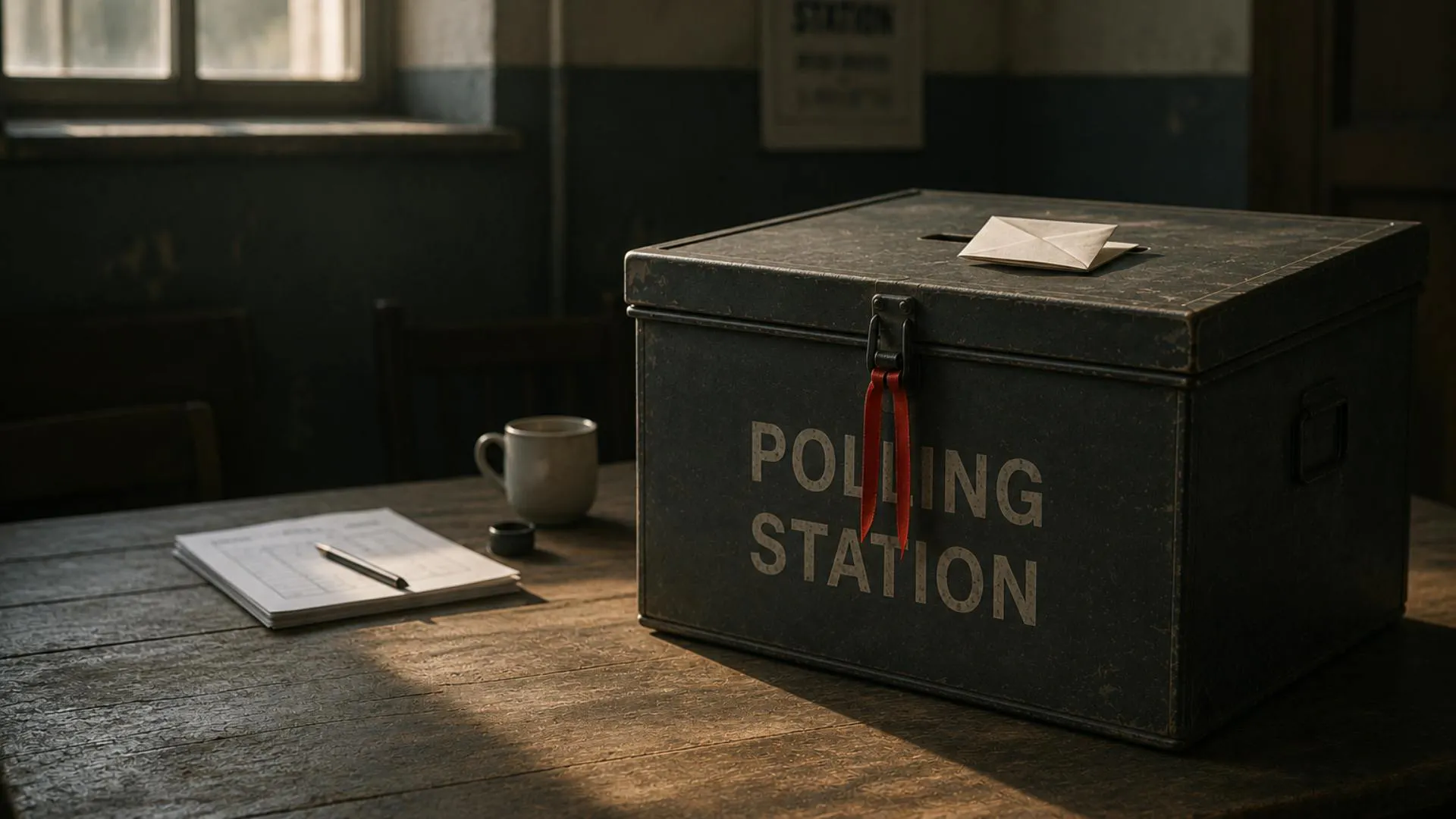
The harder near-term risk sits in Westminster. Thursday's local elections are widely seen as a referendum on the Starmer government, with polling consistently flagging heavy Labour losses, gains for Reform UK and the Greens, and an open question over a leadership challenge. Commerzbank, Rabobank and others have explicitly cited a Starmer resignation scenario as pound-negative, partly because a more left-wing successor would unsettle gilt markets and partly because political instability would compound the existing fiscal narrative.
For Mercury clients with sterling receivables or payables in the next fortnight, the practical reality is that the dominant risk has shifted from a Middle East headline to a domestic political one, and the timing window is narrow. The pound's relative calm into the vote understates the asymmetry of outcomes once the count begins on Friday morning.
Read more...

US Dollar
The Dollar Index sits near 98.4 this morning, having drifted lower by roughly a tenth of a percent overnight after a firmer Monday session. The pattern of the past week, gains on Hormuz escalation, retracement on Hegseth-style reassurance, captures the new regime: the dollar is no longer trading the Fed, it is trading the Strait.
Operation Project Freedom is the lens through which to read the latest moves. The Pentagon's claim that the waterway is open rests on the safe transit of two US-flagged vessels under destroyer escort, and Hegseth's framing was deliberately triumphant. The market data says something more sober. Only four commercial ships transited Hormuz on Monday against a pre-war daily average above 120, and the International Transport Workers' Federation has explicitly warned shipowners not to treat the announcement as a green light.
Fed pricing has compressed accordingly. With the funds rate held at 3.50 to 3.75% at the 29 April meeting and the Summary of Economic Projections lifting the 2026 PCE forecast to 2.7%, the curve has moved past the question of cuts entirely. Markets now assign roughly a 50% probability to a 25 basis point hike in early 2027, while Powell's reluctance to label energy-driven inflation as transitory until the tariff-related goods inflation has cleared is keeping the hawkish tail alive.
Friday's non-farm payrolls is the next pressure point. Consensus is for around 60,000 jobs added in April, a sharp slowdown from March's 178,000. A material undershoot would test the dollar's safe-haven trade against a softening growth narrative for the first time in this cycle, and would force the curve to reconsider the assumption that the Fed can simply wait out the energy shock from a position of strength.
For clients running USD payables or receivables across the Friday print and into next week's Hormuz transit data, the asymmetry is real. The dollar has been priced as a one-way safe haven for most of the war, and any combination of a soft NFP and credible de-escalation would unwind that premium faster than the index has been willing to admit.
Read more...

South African Rand
The rand traded around 16.70 against the dollar in yesterday's session, its weakest level since early April. The move owes more to safe-haven dollar bid than to anything fundamentally rand-negative, but the local catalysts now lining up will determine whether 16.70 holds or whether the next leg takes it materially weaker.
The most immediate pressure point arrives today. From this morning, the Department of Mineral Resources and Energy implements a sharp increase in petrol, diesel and other refined-product pump prices, the direct fiscal pass-through of Brent's rise to the consumer. South Africa's CPI was already 3.1% in March, comfortably inside target but with the inflection clearly upwards, and energy and electricity costs have been flagged across analyst desks as the channel that will push the print higher into Q2.
That sets up a more interesting SARB. The market view a month ago was for the repo to stay at 6.75% through year-end. That consensus has fractured. Governor Kganyago has signalled, in his clearest framing yet, that the likelihood of hikes has risen, and a meaningful camp of economists is now positioning for a 25 basis point move at the May meeting. The split itself is the point: when the policy distribution widens, FX vol on the rand widens with it, and yesterday's move toward 16.70 was the curve beginning to price that.
The structural overlay has not changed but matters more now. South Africa is a net energy importer running a current account deficit of roughly 1 to 1.5% of GDP, which means every sustained move higher in Brent translates into both an inflation impulse and a balance-of-payments drag. The fiscal discipline of 2025, the primary surplus, the Fitch affirmation, the EU grey-list removal, was the reason the rand entered 2026 at the firm end of its range. That cushion is being spent now, in real time.
For clients with rand exposure, the calculus has tightened on both ends. The hike risk caps the downside relative to other emerging market currencies if it materialises, but the cost-push inflation channel is already in motion, and the next two weeks of fuel price data, CPI prints and SARB commentary will set the tone for the Q2 trajectory in a way the past month's headline-driven trading has not.
Read more...

Global Markets
Brent settled near $109.87 in yesterday's session after falling close to 4%, reversing most of Monday's surge to $114.44, which had been the highest closing level of 2026. WTI followed a similar arc to $102.27. The price action is more revealing than the level: a single Hegseth press conference can pull oil down four percent, and a single Fujairah missile alert can push it up six. That is not a market in equilibrium.
The structural picture under the headline volatility continues to tighten. Goldman Sachs flagged in a note this week that easily accessible buffers of refined products, particularly naphtha, LPG and jet fuel, are depleting faster than aggregate inventory data suggests, with regional shortages developing well before any global crunch. Iraq is offering steep discounts on this month's loadings, but only to buyers prepared to send tankers through Hormuz, an arbitrage that exists precisely because the route is not functionally open.
Equity markets have been less coherent. The S&P 500 added 0.55% in yesterday's US session, the Nasdaq gained 0.7%, and Asian markets followed higher overnight with the Nikkei up 0.4%, the Hang Seng up 1.2%, and the ASX up 1.2%. The FTSE 100 closed effectively flat. Iron ore futures hit a 20-month high near $110 a tonne, which says something about how mining-heavy indices are absorbing the energy shock. The VIX above 18 says markets are not relaxed about it.
Gold's behaviour through the war has been the cleanest signal of the rate regime shift. The metal has shed roughly 13 to 15% since late February as the curve has priced out cuts globally, and even Tuesday's modest bounce to $4,570 left it well below pre-war levels. That is unusual for a wartime environment, and it tells you how decisively the inflation-rate channel has overridden the safe-haven bid in cross-asset positioning.
The IMF's framing of the downside scenario, prolonged conflict into 2027 with Brent at $125, a "much worse" global outcome, is no longer being treated as a tail. For clients running multi-currency exposure across energy-importing economies, the practical question is whether the past four weeks of headline-driven volatility have masked a structural repricing that is still incomplete. The longer Hormuz operates at four ships a day rather than 120, the harder that question gets to dismiss.
Read more...