Go back
The Daily Brief
Trump's silence on Hormuz is itself a message. Brent has already repriced.
Tuesday, 02 June 2026
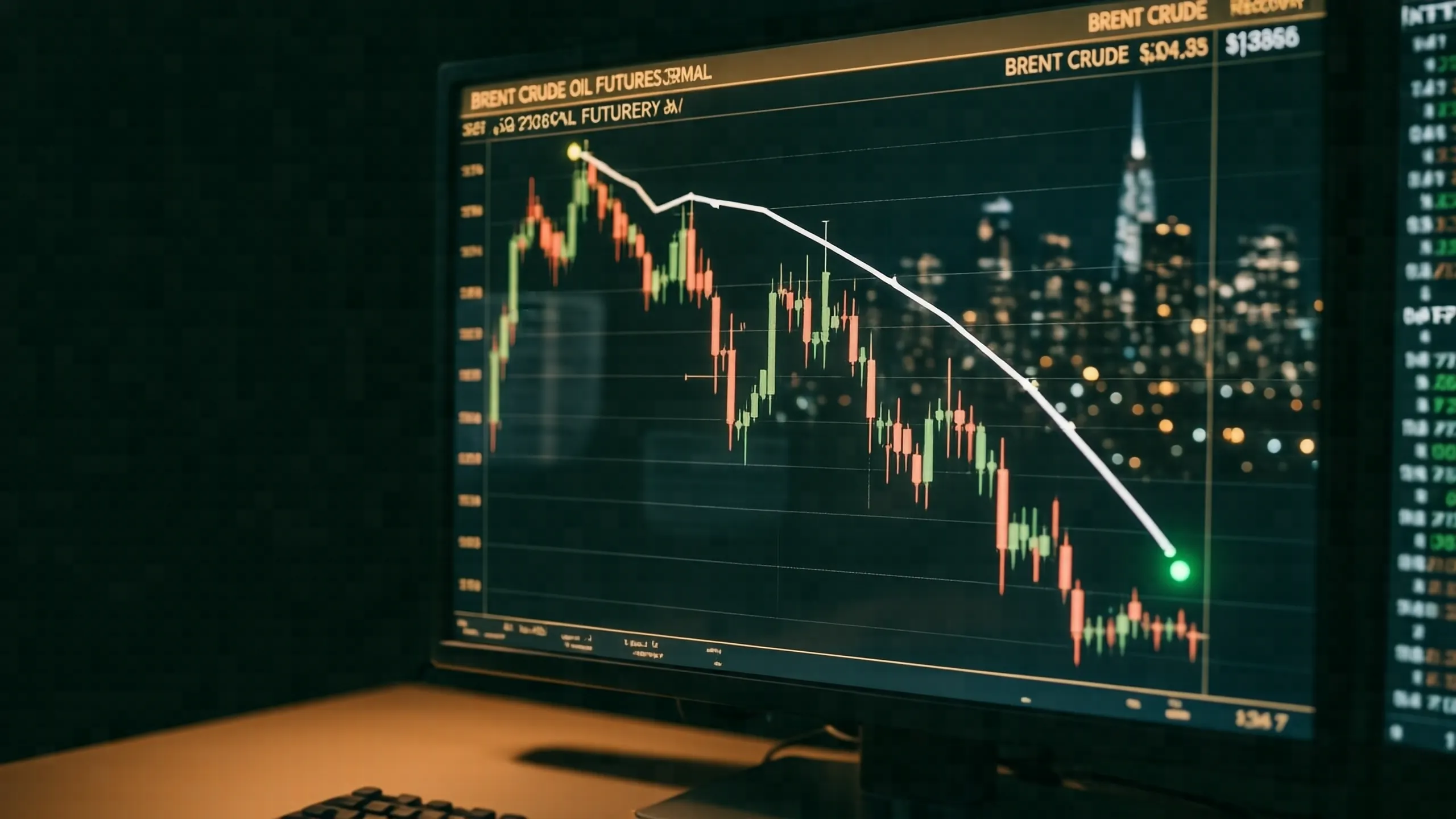
Monday's oil spike is the clearest signal of the week's central theme. President Trump's decision not to sign the Hormuz memorandum of understanding on Friday, citing a need for more time on the question of Strait sovereignty, has moved Brent from $92.40 at Monday's open to $94.58 this morning, a repricing that compresses the disinflationary impulse running through every major currency pair since the ceasefire began. Manufacturing surveys released on both sides of the Atlantic print at four-year highs, offering genuine growth confidence, but the dollar and sterling have absorbed them with restraint: markets understand that the headline risk is diplomatic, not economic, and no survey result changes that until the MOU carries a signature. For businesses managing cross-currency exposure through June, the brief's working assumption has changed: the Hormuz timeline is weeks rather than days, and the hedging window that appeared to be closing has reopened at a wider spread.
THE DAY AHEAD
Calendar and watch points for today's session. BST timezone.
| Time | Event | Watch For |
|---|---|---|
| 10:00 | Eurozone Core CPI YoY flash (May) | The ECB's preferred gauge ahead of Thursday's decision |
| 10:00 | Eurozone CPI YoY flash (May) | Headline euro-area inflation into Thursday's ECB |
| 15:00 | US JOLTS Job Openings (Apr) | Labour demand gauge ahead of Friday's payrolls |
| Ongoing | US-Iran Hormuz MOU | A Trump signature or further delay is today's primary driver for Brent and the rand |

British Pound
Sterling recovered to 1.3454 in yesterday's session, finding support in a manufacturing survey that arrived without much fanfare and carries considerable weight for the Bank of England's framing ahead of 18 June. The UK Manufacturing PMI for May printed at 53.9, its strongest reading since May 2022, driven by a combination of data centre demand, pre-purchasing ahead of tariff timelines, and resilient export orders. In a month when sterling's narrative has been built around labour market softening and CPI deceleration, the manufacturing acceleration provides a counterpoint the BoE cannot simply set aside.
The complication is the services reading, which arrived in the same release window and pointed in the opposite direction. The UK Services PMI fell to 47.9 in May, its first contraction reading of 2026, from 52.7 in April. That five-point swing in a single month is not statistical noise; it signals a genuine deterioration in the economy's largest sector. The MPC enters 18 June with a manufacturing sector running at a pace not seen in four years alongside a services sector that has tipped into contraction in the same month. Those readings do not produce a single unambiguous policy direction.
The distinction matters because the BoE's inflation concern has been driven primarily by energy pricing rather than domestic demand dynamics. Services inflation, which the Bank treats as the more reliable signal of domestically generated price pressure, will take its lead from the services sector itself. A contracting services sector is structurally disinflationary in ways that a manufacturing pre-purchasing wave is not: the manufacturing demand acceleration is largely borrowed from future periods, reflecting inventory front-running ahead of tariff deadlines rather than a genuine step-up in end demand.
Input cost inflation in manufacturing is running near a four-year high per the survey's own respondents, but that signal does not travel to the Bank's target through the same channel as services pricing. For sterling at 1.3454, the manufacturing headline has provided a floor without providing a direction. The currency is stable rather than directional because the two surveys collectively tell a story of sectoral divergence rather than aggregate momentum, and the Bank's June decision will almost certainly be a hold regardless of how either reading resolves.
What the BoE delivers alongside that hold, specifically the MPC minutes' framing of the services contraction and any guidance on the path from here, will carry more market weight than the rate itself. Businesses with GBP receivables or sterling-denominated import costs entering Q3 planning cycles have a brief window in which the rate is stable and the direction remains genuinely two-sided.
Read more...

US Dollar
The Dollar Index sits at 99.19 this morning, fractionally higher than Monday's close but some distance from the directional clarity that a manufacturing reading of 54.0 would ordinarily generate. The May ISM Manufacturing PMI, released on Monday, confirmed five consecutive months of expansion and registered its strongest level since May 2022. New orders accelerated, production growth held firm, and the broad economy recorded its 19th consecutive month of expansion. By conventional logic, this was a dollar-positive session. The dollar's muted response to it is the more instructive data point.
The restrained reaction reflects a market that has redirected attention toward the single variable the manufacturing data cannot resolve: the inflation trajectory into the FOMC's 16 and 17 June meeting. With a near-certain implied probability of no change to the 3.50-3.75% target range, the rate decision itself is not the event. The event is the updated economic projections and the chair's characterisation of the oil shock's trajectory. For the Fed to acknowledge that the disinflationary impulse is durable, it needs a May CPI reading on 10 June that shows the energy component beginning to unwind.
If Monday's Brent repricing feeds into that calculation, the picture is less clean than it was at last week's close. The sceptical reading of the ISM result is doing meaningful work in the currency market. Survey respondents themselves noted pre-purchasing and inventory building ahead of tariff deadlines as contributors to the month's strength. That is demand borrowed from future periods rather than a genuine acceleration in end consumption, and the Fed has flagged this dynamic in recent communications.
A manufacturing sector expanding partly because buyers are front-running future cost increases is not the same as one expanding because underlying demand is accelerating, and the dollar market is making that distinction at 99.19. For the dollar's Q3 direction, the Hormuz timeline remains the governing variable. A signed MOU removes the energy premium from forward PCE calculations and gives the Fed the conditions it needs to signal a more accommodative path without appearing to tolerate structural inflation.
The unsigned status changes that logic: each additional week without a deal keeps oil elevated, keeps the energy component of CPI stickier, and reduces the room the Fed has to signal anything beyond an extended hold. Clients with dollar exposures running into the second half of 2026 are effectively holding a position on both the diplomatic calendar and the economic one, and right now those two calendars are not aligned.
Read more...

South African Rand
The rand closed Monday's JSE session at 16.23, its firmest since mid-April, and for once the currency and the central bank are pulling the same way. The SARB raised the repo rate by 25 basis points to 7.00% on 29 May, its first hike since 2023, on a 4-2 vote. A higher policy rate widens the carry that has underpinned the rand through a volatile quarter, and a currency that strengthens in the sessions after a hike is the textbook response rather than a puzzle. The move was pre-emptive, leaning against an oil-driven inflation impulse that had pushed April CPI to 4% before second-round effects could embed.
The committee's case rested on the source of the inflation rather than its level. South African growth is running near 1.4% and domestic demand is not driving prices; April's jump came through fuel pass-through from an external shock, compounded by the end of temporary fuel-levy relief. Faced with that, the SARB chose to defend the target now rather than risk a more expensive correction later, judging the inflation risk more pressing than the cost of higher borrowing to a low-growth economy. The 4-2 split shows the decision was genuinely contested, but the majority treated the overlapping supply shocks as the greater danger.
What has changed since the decision is the very shock the hike was built to contain. When the committee moved, the oil story was still pointing down; within days, President Trump's decision not to sign the Hormuz MOU has carried Brent from $92.40 back to $94.58, and the disinflation the bank might otherwise have leaned on has stalled. That reversal vindicates the pre-emptive logic rather than undermining it: a committee that had waited would now be tightening into a reaccelerating shock rather than ahead of it. The open question has shifted from whether the SARB moved too early to whether one hike is enough if Brent holds above $93 into the July meeting.
The rand's firmness is not a pure carry story. Part of it is positioning: traders who had braced for a softer rand have covered, adding spot demand that has carried USD/ZAR back through its pre-decision level. The more durable question is whether the real-rate advantage, wider after the hike and still attractive on a cross-EM basis, can hold that flow if oil keeps climbing and global risk sentiment turns. A higher carry helps at the margin, but it does not insulate the rand from a broad dollar bid if the Hormuz timeline deteriorates further.
For businesses managing rand payables, import pricing, or repatriation timing, 16.23 reflects an unusually supportive alignment: a higher domestic rate and a currency near its strongest in weeks, set against an oil price that is once again working against a net energy importer. Alignments this clean rarely hold, because the carry leg depends on a SARB that has told the market it will act again if the shock embeds, and the oil leg depends on a negotiation in Washington and Tehran that has just slipped from days to weeks. The level on the screen is steadier than the forces beneath it.
Read more...

Global Markets
Brent is trading at $94.58 this morning after touching close to $96 during Monday's session: the clearest single expression of what President Trump's Friday decision not to sign the Hormuz MOU has done to market expectations. From $92.40 at Monday's open to a session peak near $96, and now retracing modestly, the oil market has repriced from a roughly 80% probability of near-term signature to something closer to 50-50. The specific issue holding back Trump's approval is not procedural; it is the fundamental question of whether the Strait of Hormuz will remain under Iranian sovereignty following any agreement.
Iran's public position is that it will. Trump's public characterisation implies it will not. That gap is not resolvable through drafting adjustments. The structural arithmetic of a reopened strait remains unchanged and continues to underpin the directional trend in oil. Current transit through Hormuz stands at two to five vessels daily against a pre-conflict baseline of approximately 70 per day. Saudi Arabia's East-West pipeline has provided partial alternative routing, but at roughly seven million barrels per day it cannot replace the strait at scale, and the constraint is physical capacity rather than operational willingness.
A reopening would deliver a supply impulse that futures curves have partially priced but not fully absorbed. The unsigned status means that impulse remains conditional, and conditional supply relief at $94.58 is Brent's current equilibrium. Global equity markets took Monday's oil repricing with measured composure. The S&P 500 closed broadly flat as the ISM Manufacturing PMI at 54.0 provided a countervailing growth signal, and the Dow edged slightly higher. European markets tracked the same pattern, with the FTSE 100 and Euro Stoxx 50 finding modest support from the expectation that the Hormuz delay reflects diplomatic complexity rather than deal collapse.
The JSE All Share faces a softer open this morning as overnight futures trade slightly negative, the combination of Brent elevation and an equity bid that lacks a clear catalyst keeping sentiment cautious. For global markets, the period between today and the FOMC on 16 June has thickened from a two-variable calendar to a three-variable one. The May CPI release on 10 June was always the defining near-term moment for rate markets; the Hormuz timeline has now acquired similar weight, since the oil price level on 10 June will determine how cleanly the energy disinflation story reads in the headline number.
A deal signed before then would likely push Brent back below $90 and clarify the CPI narrative; a deal delayed beyond then would keep the energy component elevated and complicate the Fed's framing. The range of Brent outcomes over the next eight days is wide enough to change the direction of central bank communication on both sides of the Atlantic. Clients with commodity-exposed FX positions are, in effect, running a position on two negotiations simultaneously: the one happening in Washington and Tehran, and the one that begins when the June 10 data lands.
Read more...